
How to Match Existing Hardwood Floors Without Replacing Everything
Hardwood floors rarely make a fuss. They sit quietly under everything life throws at them. Until the day a remodel changes the layout and suddenly there’s a visible gap where boards should be.
A kitchen expands. A wall comes down. Carpet gets removed from the living room. And now the existing hardwood has to meet something new.
That moment often brings one big question. Does everything have to be replaced to make it look right?
Not necessarily.
Matching existing hardwood floors is absolutely possible. When handled with care, the new section can blend so naturally that no one can tell where the original flooring ends.
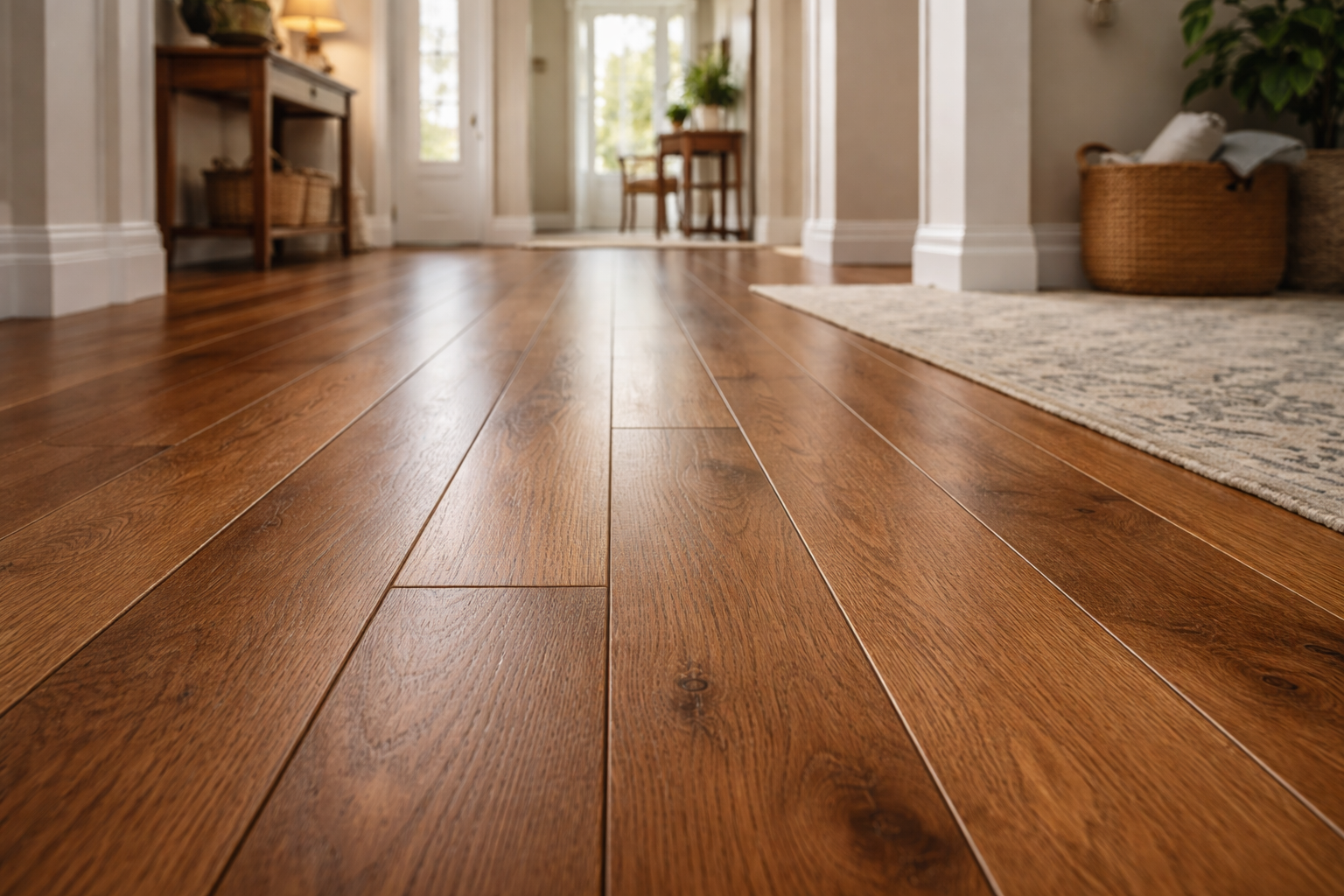
Keeping the original charm while updating the space
Hardwood carries history. Years of sunlight soften the tone. Foot traffic adds subtle character. Furniture leaves faint impressions that tell a story.
Tearing it all out just to create consistency often means losing that personality.
If the current floor is structurally sound, extending or patching it can preserve the character of the home while allowing the space to grow.
This approach works especially well when:
- Converting a carpeted room to hardwood
- Repairing localized damage
- Extending into an addition
- Opening up adjoining rooms
The success of the project comes down to detail.
Identifying the wood species correctly
Every hardwood species has a distinct look.
White oak typically has a straighter grain and more subtle movement. Red oak tends to show stronger grain patterns and warmer undertones. Maple appears smoother and more uniform.
Even if two floors share a similar stain color, mismatched grain patterns will stand out immediately once installed side by side.
Sometimes identifying the species requires looking beneath a vent cover or examining an unfinished edge. Getting this right is the foundation of a seamless match.
Matching plank width and thickness
Board size plays a major role in visual continuity.
Older homes often have narrower planks. Many newer installations feature wider boards. Mixing widths without intention can break the rhythm of the floor.
Thickness matters just as much. If the new boards sit slightly higher or lower than the existing ones, the transition becomes noticeable. Professional installation ensures both sections sit flush and aligned.
Edge profile is another subtle factor. A micro beveled edge reflects light differently than a square edge. Keeping profiles consistent helps the surface feel unified.
Color is where most blending challenges happen
Even when the species and board dimensions match perfectly, color differences can reveal the transition.
Hardwood changes over time. Sun exposure deepens tones. Daily use softens finishes. New boards often appear lighter at first.
This is completely normal.
Refinishing for a cohesive look
One of the most effective ways to create a seamless appearance is refinishing the connected areas together.
Sanding both old and new boards removes surface wear and allows a single stain to be applied across the entire space. This process evens out tone and minimizes visible variation.
Once sealed, the floor reads as one continuous surface rather than two separate installations.
Weaving boards for a natural transition
If only a section is being replaced, a straight seam can draw attention.
Instead, professionals often weave new boards into existing rows. This staggered integration breaks up the line where old meets new and makes the transition much harder to detect.
It is a subtle technique, but it makes a significant visual difference.
Solid and engineered considerations
If the original flooring is solid hardwood, extending with solid boards is usually the simplest solution.
Engineered hardwood can sometimes be introduced, provided the thickness and height align correctly. Surface veneer thickness should also allow for refinishing if blending is required.
Choosing compatible materials ensures the floor performs consistently across the entire space.
Accepting natural variation
No hardwood floor is perfectly uniform. Even within the same batch, boards will vary slightly in grain and tone.
The goal is not flawless duplication. The goal is cohesion.
When species, width, stain tone, and finish align thoughtfully, the floor feels intentional and balanced.
Preparation makes the difference
Before installation begins, samples should be placed next to the existing flooring in natural daylight. Lighting can change the way undertones appear.
Moisture testing and proper acclimation are also critical. Allowing new boards to adjust to the home’s environment reduces long term movement and protects the integrity of the entire floor.
Matching existing hardwood floors without replacing everything requires patience and craftsmanship. When done correctly, the result feels effortless. The space looks complete, as though the flooring has always extended exactly where it does.
Bring your hardwood together seamlessly
A remodel does not have to mean starting from scratch. In Birmingham, Vestavia Hills, Hoover, Homewood, and Greystone, our flooring experts at In and Out Flooring specialize in hardwood installation, refinishing, and seamless floor matching. From precise in home measurement to the final finish, every project is approached with care and craftsmanship. Reach out today to schedule a consultation and let the entire space come together naturally.